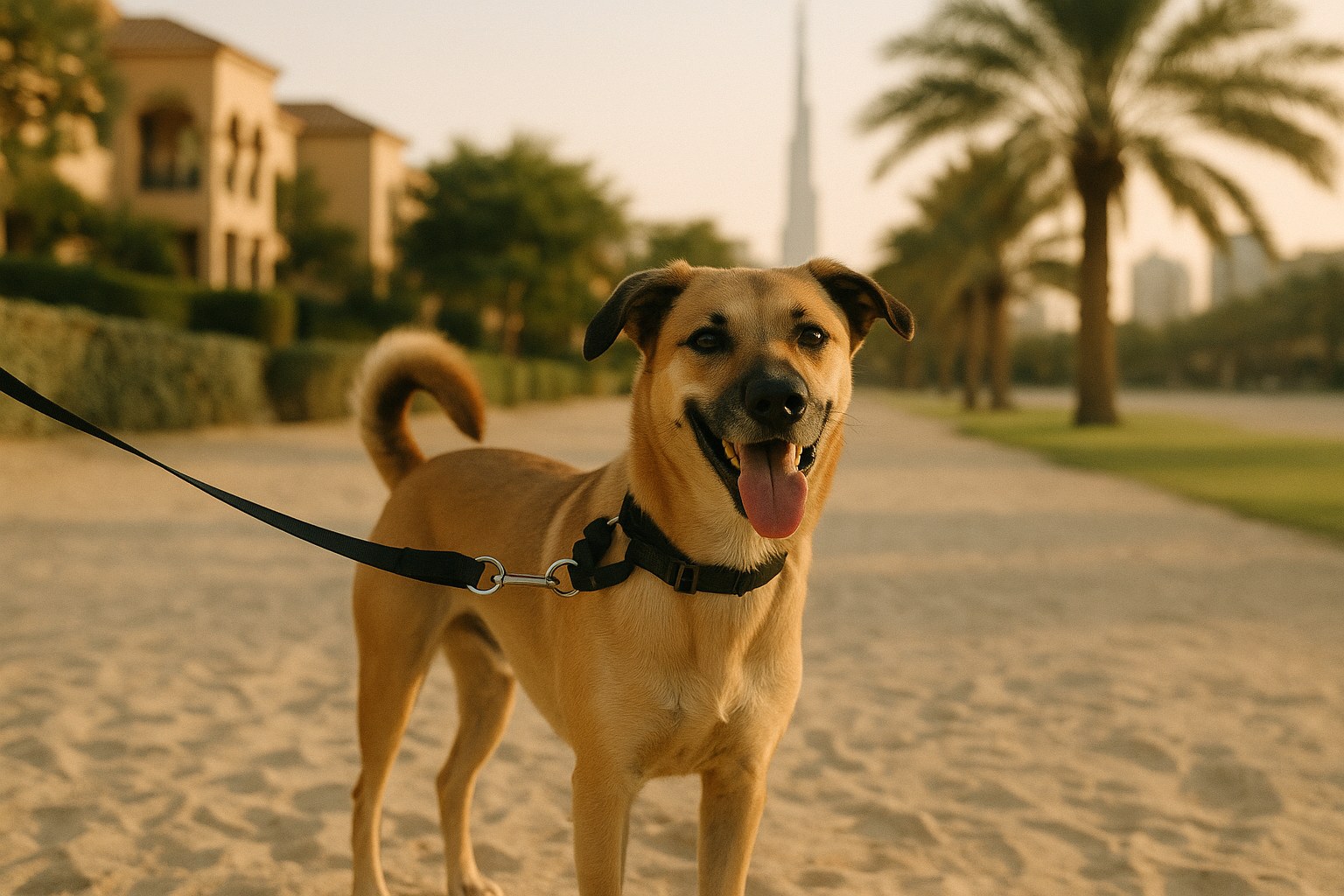
Quick answer: Yes, you can walk a dog in Dubai summer, but only during safe hours — before 8am and after 7pm — when pavement temperatures drop below dangerous levels. With ambient temperatures reaching 40-48°C and tarmac exceeding 70°C in direct sun, midday walks can cause severe paw burns and heat stroke in dogs.
Dubai's summer presents unique challenges for dog owners, but with the right knowledge and timing, you can keep your furry friend happy and healthy even during the hottest months. The key lies in understanding the dramatic temperature swings throughout the day and recognising the signs that indicate when it's safe to venture outside.
Many new dog owners in the UAE underestimate just how quickly pavement can heat up or how differently dogs experience extreme temperatures compared to humans. Unlike us, dogs can't sweat through their skin — they rely primarily on panting to cool down, making them particularly vulnerable to Dubai's intense summer heat and high coastal humidity.
The good news? Dubai's dog-friendly infrastructure has grown significantly in recent years, with air-conditioned indoor facilities, early-morning dog parks, and evening beach access providing plenty of alternatives when outdoor walks aren't feasible. Understanding the seasonal rhythm of life with dogs in Dubai means you'll never be stuck indoors for months on end, and your dog will stay active and socialised year-round.
When is it too hot to walk a dog in Dubai?
It's too hot to walk your dog when ambient temperatures exceed 35°C or when you can't comfortably hold your hand on the pavement for five seconds.
During Dubai's summer months (May through September), temperatures regularly climb to 40-48°C, with pavement temperatures exceeding 70°C in direct sunlight. At these levels, your dog's paw pads can suffer serious burns within seconds of contact. The "five-second rule" is your best friend here — if the pavement is too hot for your bare hand, it's definitely too hot for your dog's paws.
Humidity compounds the problem significantly along Dubai's coast. Even when temperatures drop to the mid-30s, high humidity prevents dogs from cooling effectively through panting. Marina, JBR, and other coastal communities often feel more oppressive than inland areas like Arabian Ranches or Dubai Hills, where the air is drier.
Watch for early warning signs that your dog is overheating: excessive panting, drooling, glazed eyes, or stumbling. These symptoms can escalate to heat stroke rapidly, requiring immediate veterinary attention that could cost 500-1,500 AED in emergency fees.
What are the safest hours for dog walks in Dubai summer?
The safest hours for summer dog walks in Dubai are before 8am and after 7pm when both air and surface temperatures have cooled sufficiently.
Early morning walks between 5:30am and 8am offer the coolest conditions, with temperatures often 10-15°C lower than midday peaks. The pavement has had all night to cool down, and humidity levels are typically at their lowest. Many Dubai dog owners become early risers by necessity during summer months, joining the community of joggers and outdoor enthusiasts who've adapted to the climate.
Evening walks after 7pm can be pleasant, but pavement may still retain heat from the day. Test surfaces carefully, especially around buildings or areas with lots of concrete and minimal shade. Parks like those in Town Square or Dubai Hills tend to cool more quickly than urban streets in Downtown or Marina due to grass coverage and better air circulation.
Weekend mornings are particularly popular in dog-friendly communities, with impromptu meetups happening in parks across Jumeirah, Mirdif, and Damac Hills. These social walks provide exercise for both dogs and owners while building the support network that's essential for pet ownership in Dubai.
How can you protect your dog's paws from hot pavement?
Protective dog booties or paw wax provide the most effective barrier against hot pavement, with quality booties costing 80-200 AED and lasting an entire summer season.
Booties take some getting used to — start with short indoor sessions before attempting walks. Many dogs initially walk awkwardly, lifting their feet high or trying to shake the booties off. Persistence pays off, as most dogs adapt within a week of consistent use. Look for booties with breathable fabric and secure velcro straps that won't slip off during walks.
Paw wax offers a less intrusive alternative, creating a protective barrier that you apply before walks. Products like Musher's Secret or local alternatives available at Dubai pet stores typically cost 50-100 AED and last several months. Apply generously to paw pads and between toes, allowing a few minutes for absorption before heading out.
For budget-conscious owners, stick to grassy areas whenever possible. Dubai's many parks and green spaces offer relief from burning pavement, though you'll need to ensure your dog is properly leashed as Dubai Municipality requires all dogs to be controlled in public areas. Community parks in Arabian Ranches, Jumeirah Park, and similar developments often have extensive grass coverage perfect for summer exercise.
What indoor alternatives exist when outdoor walks aren't possible?
Dubai's growing network of air-conditioned pet facilities, indoor training centres, and dog-friendly malls provide excellent alternatives when summer heat makes outdoor walks impossible.
Several indoor dog training facilities across Dubai offer climate-controlled spaces for exercise and socialisation. These facilities typically charge 100-200 AED for day sessions and provide structured activities that tire dogs mentally and physically. Many are located in easily accessible areas like Al Quoz, Dubai Investment Park, and near major residential communities.
Dog-friendly shopping malls have become increasingly common, with many welcoming leashed, well-behaved dogs during specific hours. The air conditioning provides relief for both you and your pet, while the smooth floors are easy on sensitive paw pads. Check with individual mall management for their current pet policies, as these can change seasonally.
At-home alternatives shouldn't be overlooked. Puzzle toys, indoor training sessions, and interactive feeders can provide mental stimulation that's just as tiring as a walk. A 30-minute training session teaching new commands or tricks often leaves dogs more satisfied than a quick outdoor potty break. Indoor play sessions work particularly well for smaller breeds that need less intensive exercise.
How do you recognise heat stress in dogs?
Early signs of heat stress include excessive panting, drooling, and lethargy, while severe symptoms like glazed eyes, stumbling, or collapse require immediate emergency veterinary care.
Unlike humans, dogs have limited ability to regulate body temperature. Heavy panting is often the first sign something's wrong — while some panting is normal, rapid, laboured breathing with the tongue hanging far out indicates your dog is struggling to cool down. Excessive drooling, especially thick, sticky saliva, is another early warning sign.
Watch for behavioural changes during or after walks. Dogs experiencing heat stress may seem disoriented, lag behind, or seek shade obsessively. Their gums might appear bright red or, in severe cases, pale or blue. If your dog's gums feel hot and dry rather than cool and moist, head for air conditioning immediately.
Advanced symptoms require emergency action: glazed or bloodshot eyes, stumbling, vomiting, or collapse indicate heat stroke. This is a life-threatening emergency requiring immediate cooling and veterinary intervention. Emergency vet visits can cost 1,000-3,000 AED, but quick action can save your dog's life. Pour cool (not cold) water over your dog's body while rushing to the nearest emergency clinic.
When does Dubai's weather become dog-friendly again?
Dubai's weather becomes comfortable for normal dog walking routines from November through March, with December and January offering the most pleasant conditions for extended outdoor activities.
The transition from summer to winter happens relatively quickly in Dubai. October still requires careful timing, but by November, you can extend morning walks and introduce afternoon outings. Temperatures during these months typically range from the low 20s to low 30s°C — perfect for longer beach walks, hiking, and outdoor training sessions.
This is when Dubai truly shines for dog owners. The city's extensive beach access becomes usable again, with Dubai Islands Dog Beach offering off-leash areas for swimming and socialising. Weekend camping trips to areas like Hatta become possible, and many hotels begin welcoming dogs to their outdoor terraces and pool areas.
Winter is also ideal for addressing any training or socialisation needs that may have been neglected during the summer months. The UAE's moderate winter climate makes it perfect for outdoor obedience classes, agility training, or simply rebuilding your dog's stamina after months of limited exercise. Many dog owners use this period to explore new areas of the city and establish routines that will help them cope with the next summer season.
What legal requirements apply to dog walking in Dubai?
All dogs must be leashed in public areas, registered with Dubai Municipality, and current on vaccinations before they can legally be walked anywhere in Dubai.
Dubai Municipality requires annual registration costing approximately 100-200 AED, along with current rabies vaccination and microchipping. Your vaccination card should be easily accessible during walks, as community security or authorities may request proof of compliance. Annual vaccination typically costs 150-400 AED depending on your vet and the vaccines required.
Leash laws are strictly enforced across Dubai, with fines issued for non-compliance. Even in off-leash dog parks, dogs must be leashed when entering and exiting the designated areas. Some communities have additional breed restrictions, particularly for larger or traditionally guard dog breeds, so check your specific area's regulations.
Import requirements become relevant if you're considering getting a dog while living in Dubai. MOCCAE (Ministry of Climate Change and Environment) handles import permits, requiring extensive documentation and vaccination records. The process can take several weeks and cost 1,000-3,000 AED in fees and preparations, making it essential to plan well in advance.
Frequently asked questions
How hot is too hot to walk my dog in Dubai?
Anything above 35°C ambient temperature or when pavement is too hot to touch for five seconds is too dangerous for dog walks. During Dubai summer, this means limiting walks to before 8am and after 7pm when both air and surface temperatures have cooled sufficiently. Always test pavement temperature with your hand before allowing your dog to walk on it.
Can I walk my dog on Dubai beaches in summer?
Beach walks are possible in early morning or evening hours when sand temperatures are manageable, but midday beach walks should be avoided entirely. Sand can reach extreme temperatures just like pavement, and the high humidity near the coast makes it harder for dogs to cool down through panting. Dubai Islands Dog Beach offers the best facilities for safe summer beach visits.
What should I do if my dog shows signs of heat stroke during a walk?
Move your dog to shade or air conditioning immediately, pour cool (not cold) water over their body, and head to the nearest emergency vet clinic. Heat stroke symptoms include glazed eyes, excessive drooling, stumbling, or collapse. This is a life-threatening emergency that requires professional treatment — don't try to treat it yourself.
Are there indoor places where I can exercise my dog during Dubai summer?
Yes, Dubai has several air-conditioned indoor dog facilities, training centres, and dog-friendly shopping areas. Many residential communities also have covered or indoor spaces suitable for exercise. Indoor training sessions, puzzle toys, and mental stimulation activities can effectively tire your dog when outdoor exercise isn't safe.
The bottom line
Walking your dog in Dubai summer is absolutely possible with proper timing, preparation, and awareness of the risks. The key is adapting your routine to work with the climate rather than against it — early mornings and evenings become your best friends, while midday heat calls for indoor alternatives and creative solutions.
Remember that every dog adapts differently to extreme heat, with factors like breed, age, and health affecting their tolerance levels. Building a routine that prioritises safety while maintaining your dog's physical and mental wellbeing will help both of you thrive in Dubai's unique environment.
Last updated: May 2026